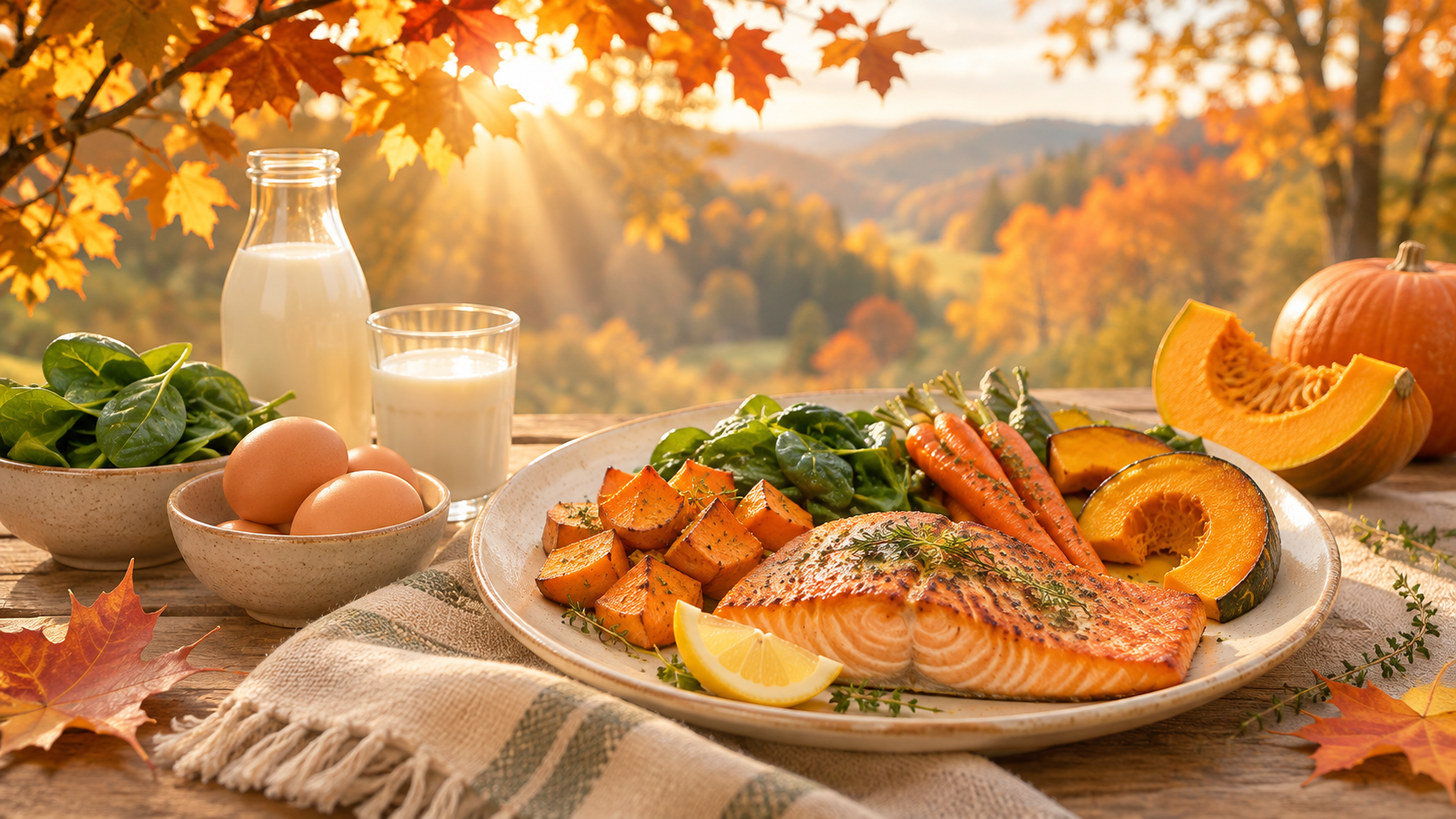
As autumn settles into winter, the natural rhythms of our days begin to change. The mornings grow darker, daylight becomes shorter, and many of us find ourselves spending more time indoors. Our meals change, too. Fresh summer salads give way to hearty soups, roasted vegetables, warm breakfasts and comforting dishes that nourish us through the colder months.
These seasonal changes offer an opportunity to become more intentional about how we care for our bodies.
Two nutrients worth understanding at this time of year are vitamins A and D. Although they have different roles in the body, both contribute to essential functions that support our health throughout the year.
Vitamin D, often called the sunshine vitamin, has a particularly interesting relationship with the changing seasons. Vitamin A, meanwhile, can be found in many of the colourful vegetables that naturally make their way into our autumn and winter kitchens.
Understanding what these vitamins do, where to find them and how to use supplements thoughtfully can help us make informed choices about everyday nutrition.
Vitamin D: The Sunshine Vitamin
Vitamin D is unusual among vitamins because our bodies can produce it when our skin is exposed to ultraviolet B (UVB) radiation from sunlight. This is why vitamin D has earned its familiar nickname: the sunshine vitamin.
Vitamin D helps the body absorb calcium and phosphorus, making it essential for maintaining healthy bones and teeth. It also contributes to normal muscle and immune function.
During the warmer months, sunlight can contribute to our vitamin D supply. In Canada, however, seasonal changes, shorter daylight hours and reduced sun intensity can make this source less reliable. Age, skin pigmentation, time spent outdoors and other factors also influence how much vitamin D the body produces.
This is one reason Health Canada recommends obtaining vitamin D regularly through food or supplements, rather than depending on sunshine alone.
Finding Vitamin D in Everyday Foods
Relatively few foods contain substantial amounts of vitamin D naturally. Fortunately, some familiar foods can help us maintain a regular dietary source.
Fatty fish such as salmon, trout and Arctic char are natural sources of vitamin D. Egg yolks provide smaller amounts, while fortified milk and fortified plant-based beverages offer accessible everyday options. Some soft margarines also contain vitamin D.
A breakfast of eggs with whole-grain toast, a salmon dinner with roasted vegetables, or a bowl of oatmeal prepared with fortified milk can all contribute to a varied pattern of eating. For people who eat little or no fish or dairy, checking the nutrition labels on fortified alternatives can be particularly useful.
The goal is to build reliable sources of vitamin D into everyday life, using foods that fit our preferences, circumstances and budgets.
Do We Need More Sunshine?
Spending time outdoors can support wellbeing in many ways, including movement, fresh air and opportunities to connect with nature. However, we don't need to seek unprotected sun exposure to obtain vitamin D.
Ultraviolet radiation can damage the skin and increase skin cancer risk. Food and appropriately selected supplements provide a more dependable way to support vitamin D intake without deliberately increasing UV exposure. We can still enjoy a bright winter walk, the beauty of a snowy landscape or a few peaceful moments outdoors while following appropriate sun-safety practices.
Vitamin A: Colourful Foods, Important Functions
While vitamin D is closely associated with sunlight, vitamin A has its own interesting connection to the seasons. Think of the familiar colours of autumn: orange pumpkins, golden squash, sweet potatoes and deep-green leafy vegetables.
Many of these foods contain carotenoids, natural plant pigments that give fruits and vegetables their distinctive colours. Some, particularly beta-carotene, can be converted by the body into vitamin A.
Vitamin A is essential for normal vision, particularly the ability to see in low-light conditions. It also contributes to immune function, growth and development, and the maintenance of healthy tissues. An important distinction is that vitamin A supports normal eye function; consuming additional vitamin A beyond our needs does not give us enhanced night vision.
Two Ways We Obtain Vitamin A
Vitamin A reaches us through two main dietary forms.
Preformed vitamin A is found in animal-derived foods such as eggs, dairy products, fish and liver. This form is already biologically available to the body. Provitamin A carotenoids, including beta-carotene, are found in plant foods. The body converts these compounds into vitamin A as needed.
Carrots, pumpkin, sweet potatoes, winter squash, spinach, kale and other leafy greens are familiar sources of these carotenoids. One of the lovely things about this nutrient is that it fits naturally into simple seasonal cooking.
A bowl of roasted butternut squash soup, a sweet potato baked with herbs and olive oil, or a hearty vegetable stew with carrots and leafy greens can all help provide vitamin A through ordinary meals.
Cooking some vegetables can make their carotenoids easier for the body to access. Including a modest amount of dietary fat, such as olive oil, can also support absorption of these fat-soluble compounds.
Bringing Vitamins A & D Together in the Winter Kitchen
Vitamins A and D are both fat-soluble nutrients, meaning they are absorbed alongside dietary fats and can be stored in the body. Their individual functions differ, but both belong within a varied pattern of eating that supports our bodies across the seasons.
Consider a simple winter meal: baked salmon served with roasted sweet potatoes and sautéed spinach. The salmon provides vitamin D, while the sweet potatoes and spinach contribute carotenoids that the body can convert into vitamin A. Or imagine a weekend breakfast of eggs, whole-grain toast and a glass of fortified milk or a suitable fortified plant-based alternative.
These meals don't need to be perfect or carefully calculated to have value. They simply bring together familiar foods that contribute different nutrients. A helpful approach is to think about variety over time rather than trying to include every nutrient in every meal.
Understanding Supplements: Getting Enough Without Overdoing It
Food provides a valuable foundation for nutrition, but there are circumstances where supplements can also play an appropriate role.
Vitamin D supplementation deserves particular attention in Canada.
Health Canada recommends a daily dietary source of vitamin D for people aged 2 to 50, either from foods containing vitamin D or from a supplement. For those in this age group who do not consume vitamin D-containing foods daily, a 400 IU (10 microgram) supplement is an appropriate option.
Adults aged 51 and older are advised to take a daily supplement containing 400 IU of vitamin D while continuing to enjoy vitamin D-containing foods.
Individual needs may differ, particularly for people with certain medical conditions, absorption difficulties or clinician-diagnosed deficiencies. It is also useful to know that more is not always better. Because vitamins A and D are fat-soluble, excessive amounts from certain supplements can accumulate and cause harm.
High intakes of preformed vitamin A, especially from concentrated supplements or frequent large servings of liver, may be harmful. People who are pregnant or could become pregnant should be particularly cautious with high-dose preformed vitamin A and retinoid medications because excessive exposure can affect fetal development.
High-dose beta-carotene supplements also warrant caution, particularly for people who smoke, formerly smoked or have been exposed to asbestos. These concerns are different from eating ordinary carotenoid-rich vegetables.
Excessive vitamin D supplementation can raise calcium levels in the blood and may contribute to problems such as kidney stones or kidney injury. A practical approach is to check supplement labels, consider vitamins already present in multivitamins and fortified foods, and seek guidance from a pharmacist or healthcare professional before combining products or taking high doses. People with kidney disease, a history of high blood calcium, certain other medical conditions or medications that interact with these nutrients may need individualized advice. Supplements can help us meet our nutritional needs when appropriate. They are most useful when chosen with an understanding of what our bodies actually require.
A Thoughtful Approach to Seasonal Wellbeing
As the days grow shorter, it's natural to think about what our bodies need to feel supported through the changing season.
Good nutrition doesn't require complicated routines or a cupboard full of supplements. It often begins with awareness, variety and practical choices that work within everyday life. We can enjoy the sweetness of roasted carrots, the comfort of homemade soup, the nourishment of familiar foods and the restorative experience of spending time outdoors.
And we can appreciate the sunshine vitamin for what it truly offers: an essential nutrient that supports our bodies, even during seasons when sunlight is less available.
At True Essence Health, understanding our wellbeing begins with curiosity. The more we learn about how our bodies function, the better equipped we become to make thoughtful decisions about caring for them.
Sometimes, supporting our health through the darker months begins with something as familiar as a colourful plate of food and a little more understanding of what it provides.
Comments
No comments yet.